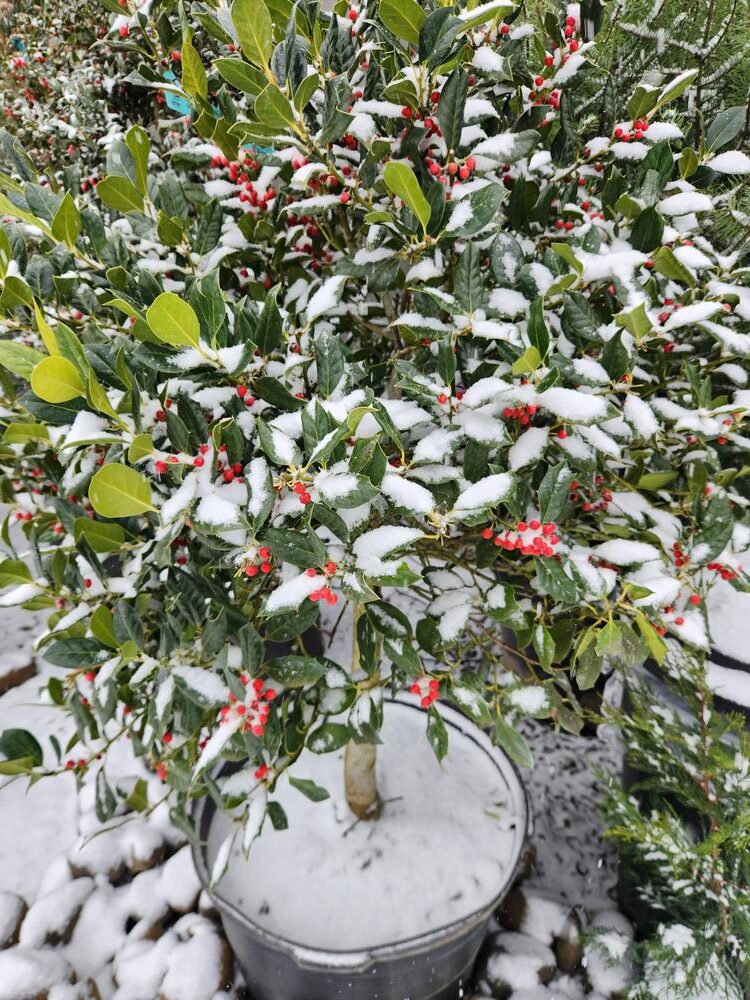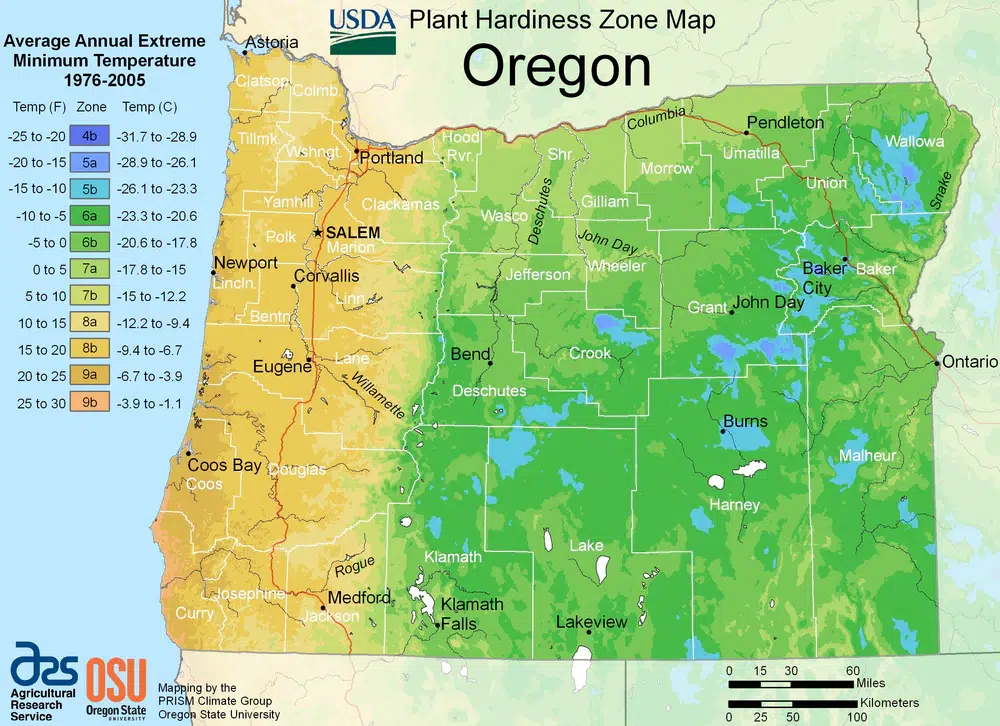
In the Oregon gardening world, winter isn’t just a time for seed catalogs and rain gear—it’s prime time for pruning. While the Willamette Valley is hunkered down in mist and Central Oregon is dusted in snow, your shrubs and ornamental grasses are entering “dormancy.” This is their version of a deep sleep where sap flow slows and growth halts. For the savvy gardener, this is a golden window: you can see the plant’s architecture without leaves getting in the way, and the plant has months to heal before the spring “flush” of growth.
Here is your guide to mastering the art of the winter snip to ensure a lush, vibrant landscape come May.
Why Winter (Dormant) Pruning is Oregon’s Secret Weapon
Most Oregonians wait until spring to clean up the yard, but by then, you’re often cutting off precious energy the plant has already spent. Dormant pruning offers several strategic advantages:
-
Visibility: With the leaves gone from deciduous shrubs, it’s easy to spot “The Three Ds”: Dead, Damaged, or Diseased wood.
-
Stress Reduction: Pruning while the plant is “asleep” minimizes the loss of sap and energy.
-
Disease Prevention: Many fungal spores and insects are inactive in the cold, reducing the risk of infection at the cut site.
-
Spring Momentum: By Removing old wood now, you redirect all of the plant’s spring energy into healthy, new growth and better flower production.
What to Prune in Winter (and What to Leave Alone)
Not every plant wants a haircut in January. Timing depends entirely on when the plant blooms.
1. Summer-Blooming Shrubs (Prune Now)
If it blooms on “new wood” (growth that happens in the spring), winter is the time to prune.
-
Examples: Panicle Hydrangeas (H. paniculata), Rose of Sharon, Spirea (summer-blooming varieties), and Potentilla.
-
The Goal: Cut back to a healthy bud to encourage vigorous new stems that will carry this summer’s flowers.
2. Ornamental Grasses (Prune Late Winter)
Whether you are on the Coast or in the High Desert, grasses provide great winter interest and wildlife cover, but they need a reset before spring.
-
Deciduous Grasses (Miscanthus, Switchgrass): Cut these back to 4–6 inches above the ground in late January or February.
-
Evergreen Grasses (Sedges, Blue Oat Grass): Do not cut to the ground. Simply “comb” through them with gloved hands to remove dead blades or lightly tidy the tips.
3. The “Wait” List (Spring Bloomers)
If it blooms in March, April, or May, don’t prune it now. You’ll be cutting off this year’s flower buds.
-
Wait until after they bloom: Lilacs, Forsythia, Rhododendrons, Azaleas, and Mock Orange.
Regional Timing: Oregon’s Three Zones
Oregon’s diverse microclimates mean “winter” ends at different times.
| Region | Best Pruning Window | Pro Tip |
| Willamette Valley | Jan – Early March | Prune on a dry day to prevent fungal issues in our humid air. |
| Central/Eastern Oregon | Feb – Late March | Wait until the “deep freeze” passes but before the sap flows. |
| Oregon Coast | Dec – Feb | Focus on thinning to allow wind to pass through and reduce storm damage. |
The Master’s Technique: How to Make the Cut
A bad cut can invite rot, especially in the soggy Pacific Northwest. Follow these three rules for success:
1. Thinning vs. Heading
-
Thinning: Removing a branch back to its point of origin. This opens up the center of the plant for airflow—essential for preventing mildew in Western Oregon.
-
Heading: Cutting a branch back to a bud. This encourages “bushy” growth.
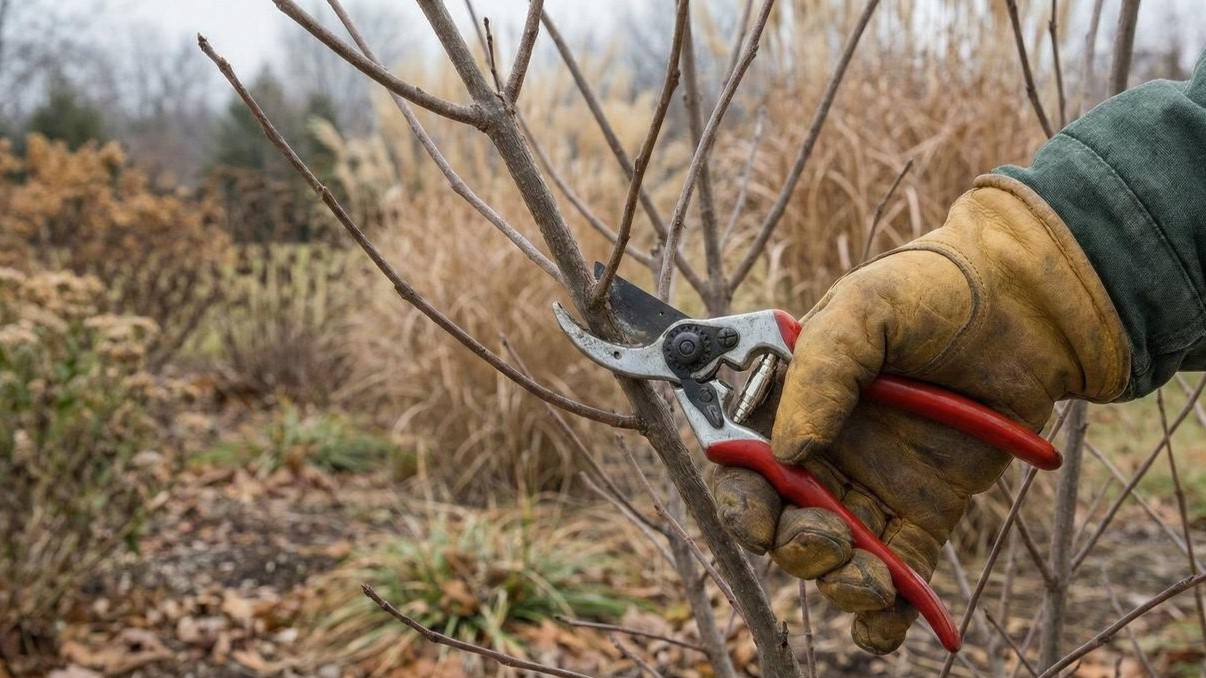
2. The 45-Degree Angle
Always cut at a slight angle away from the bud. This allows Oregon’s relentless rain to slide off the cut rather than pooling on top of the wound.
3. The One-Third Rule
For overgrown shrubs, never remove more than one-third of the total plant mass in a single winter. Over-pruning can shock the root system and lead to “water sprouts” (weak, vertical suckers).
Special Focus: Oregon Natives
Many of our favorite native shrubs benefit from a winter “tidy up” to mimic the natural effects of browsing wildlife or snow breakage.
-
Red-Twig Dogwood: For the brightest winter color, remove the oldest, largest stems (the ones that have turned greyish) right to the ground. The youngest stems have the most vibrant red color.
-
Serviceberry: Focus on thinning the interior to highlight its beautiful grey bark and structural form.
For more deep dives into specific PNW species, the OSU Extension Service provides an excellent comprehensive guide to pruning ornamental shrubs that is a staple for local Master Gardeners.
Common Winter Pruning Mistakes
-
The “Hedge Clipper” Flat-Top: Avoid shearing shrubs into balls or boxes. This creates a dense outer shell that starves the interior of light and air. Use hand pruners for a more natural, healthy shape.
-
Pruning in a Freeze: Avoid pruning when temperatures are significantly below freezing, as the wood can be brittle and shatter.
-
Dirty Tools: Oregon’s damp climate spreads diseases like fire blight easily. Wipe your blades with rubbing alcohol between plants.
Winter Tool Kit Essentials
-
Bypass Pruners: For clean cuts on stems up to 1/2 inch.
-
Loppers: For thicker branches (up to 1.5 inches).
-
Pruning Saw: For anything larger.
-
Gloves: Essential for handling those thorny Oregon Grape or Rose stems.
Ready for a Spring Masterpiece?
Winter pruning is an investment. By putting in a few hours of work while the garden is quiet, you are setting the stage for a spectacular spring show.