
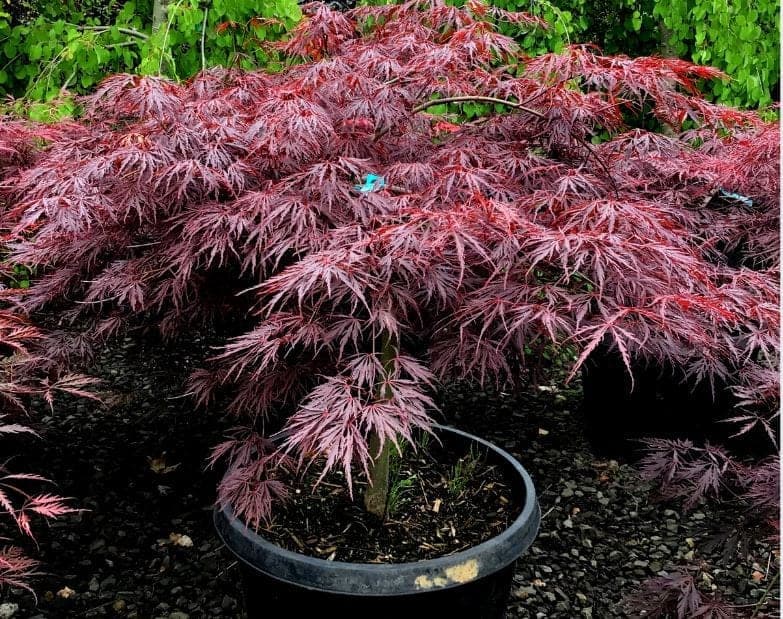
Japanese maples love the Pacific Northwest
Mild winters, rainy springs and rich soil make Oregon one of the best places in the country to grow Japanese maples (Acer palmatum). With a few basics right, they stay healthy for decades and give you spring color, summer texture and a fall show.
Where to plant
The single biggest factor is light. Most Japanese maples do best with morning sun and afternoon shade. Red-leaf and laceleaf types scorch in hot afternoon sun, especially during summer heat waves. An east-facing spot, or dappled shade under taller trees, is ideal. Keep them out of strong wind, which dries the leaves.
Soil and planting
- Choose well-drained soil. Japanese maples don't tolerate soggy roots.
- Plant at the same depth the tree grew in the pot, never deeper.
- Dig a hole two to three times wider than the root ball and loosen circling roots.
- Mulch 2 to 3 inches deep, keeping mulch away from the trunk.
Watering
Water deeply once a week through dry Oregon summers, and twice a week during heat waves or for trees planted in the last two years. Container maples dry out much faster and may need water every day or two in July and August.
Fertilizing
Go light. Too much nitrogen pushes soft growth that scorches and attracts pests. A slow-release fertilizer in early spring, or simply compost and mulch, is plenty for most trees.
Pruning
Prune in late winter while the tree is dormant and you can see its branch structure. Remove dead, crossing and inward-growing branches, and thin lightly to show off the natural shape. Avoid heavy cuts in spring when sap is flowing. Small corrective cuts are fine in summer.
Leaf scorch and other problems
- Crispy brown leaf edges: usually scorch from afternoon sun, wind or dry roots. Water deeply and add shade if possible.
- Sudden wilting of a whole branch: can be verticillium wilt, a soil-borne disease. Have it checked and remove affected wood.
- Yellowing leaves: often overwatering or poor drainage.
Popular varieties we carry
Bloodgood (deep red, upright), Coral Bark (bright coral winter stems) and green Japanese maples all thrive here. Browse Bloodgood, Coral Bark and Green Japanese maple in our catalog, or visit the nursery in Woodburn to pick one out in person.