
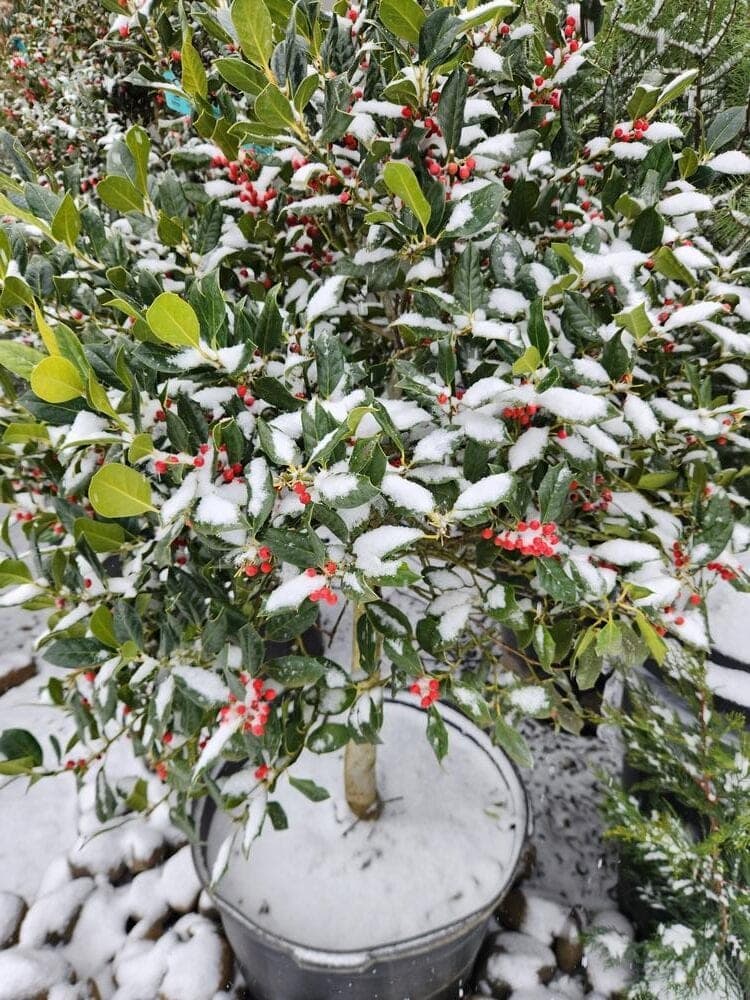
When frost arrives in the Willamette Valley
The first frost in the valley usually shows up in late October or November, and cold snaps can drop into the teens a few times each winter. Clear, calm nights are the riskiest, because heat escapes from the ground fastest when there are no clouds to hold it in.
Frost vs. freeze
A light frost forms ice on leaf surfaces and mainly damages tender growth. A hard freeze, several hours below about 28°F, can freeze plant cells and kill roots in containers. The steps below help with both.
7 ways to protect plants from frost
- Water during the day before a frost. Moist soil holds and releases more heat than dry soil.
- Cover tender plants overnight. Use frost cloth, old sheets or burlap. Drape it all the way to the ground so it traps heat rising from the soil.
- Keep plastic off the leaves. Plastic touching foliage conducts cold and can make damage worse. If you use it, prop it up on stakes over a fabric layer.
- Remove covers in the morning once temperatures rise above freezing, so plants get light and don't overheat.
- Move containers. Roots in pots are far more exposed than roots in the ground. Group pots against a south-facing wall or move them into an unheated garage during hard freezes.
- Mulch the root zone. 2 to 4 inches of bark or leaves insulates roots of perennials and newly planted trees and shrubs.
- Protect young trunks. Tree wrap on young, thin-barked trees helps prevent winter sunscald and cracking.
Plants that need the most help
- Container plants of any kind
- Plants planted in the last few weeks
- Marginally hardy plants like some citrus, hardy fuchsias and certain hebes
- Tender bulbs like dahlias and cannas, which are often dug and stored for winter
Set plants up to handle winter
Stop fertilizing by late summer so plants aren't pushing tender new growth into fall. Hold off on heavy pruning until late winter, since fresh cuts and new shoots are more frost-sensitive. And choose plants rated for your zone. Our Oregon USDA hardiness zone guide explains what grows reliably where you live.
If frost damage happens
Don't prune damaged growth right away. The dead leaves protect the healthy tissue below from the next cold night. Wait until new spring growth shows you what's alive, then cut back to healthy wood.