
Related: Learn how trees handle stress and how to help them thrive in our post on Plant Stress Responses.
Quick Takeaways
- Pick for place: Match species to your region and site (Coast, Willamette Valley/Westside, Central/East).
- Density wins: For privacy and wind control, choose evergreens with foliage down low, or keep hedges clipped.
- Plan spacing up front: Plant to the mature size and stagger rows for better coverage.
- Aim for fall–spring planting: In much of Oregon, the cool/wet season is best for establishment.
- Mix species: In longer windbreaks, diversity reduces pest/disease risk and keeps your screen full for decades.
How to Choose the Right Privacy Tree
1) Site & region fit. Oregon landscapes range from salty coastal wind to valley clay soils with wet winters and dry summers, to high-desert cold and sun. Pick trees that are proven in your microclimate (sun, soil drainage, exposure, deer). For new plantings, see OSU’s guide: Selecting, Planting & Caring for a New Tree (OSU Extension). 2) Screen density at eye level. Solid screening and better wind control come from continuous foliage near the ground. For design basics on windbreak layout and density, see: USDA NRCS – Windbreaks Overview. 3) Spacing that stays effective. Arborvitae hedges typically go 3–4 ft on center for a tight wall; larger evergreens need more room. For hedge care and spacing specifics, see: How to Plant & Care for Arborvitae Hedges in Oregon (OSU Extension). 4) Plant in the right season. In western Oregon, aim for November–April (steer clear of issues by choosing sturdy species like heat waves). In central/eastern Oregon, plant early–late fall or after thaw in late spring. See OSU’s planting guidance: Selecting, Planting & Caring for a New Tree (OSU Extension). 5) Think long-term health. steer clear of issues by choosing sturdy species like monocultures. Reference: PNW Plant Disease Handbook – Cypress Canker/Root Rot.Best Privacy Trees by Oregon Region
Willamette Valley & Westside
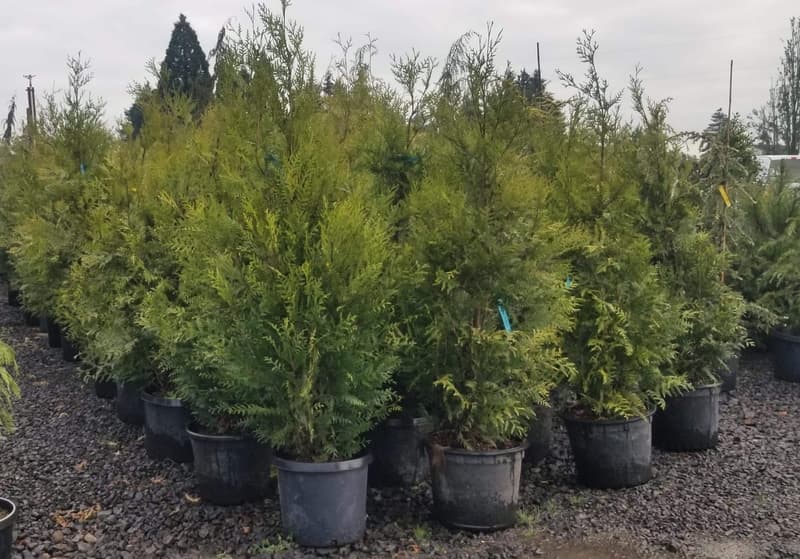
Western Redcedar (Thuja plicata) — Native, versatile, hedgeable- Dense evergreen with a classic NW look; handles sun to part shade.
- Works as a formal hedge or natural windrow.
- More info: OSU Landscape Plants Database
- Great for tight lot lines and uniform hedges.
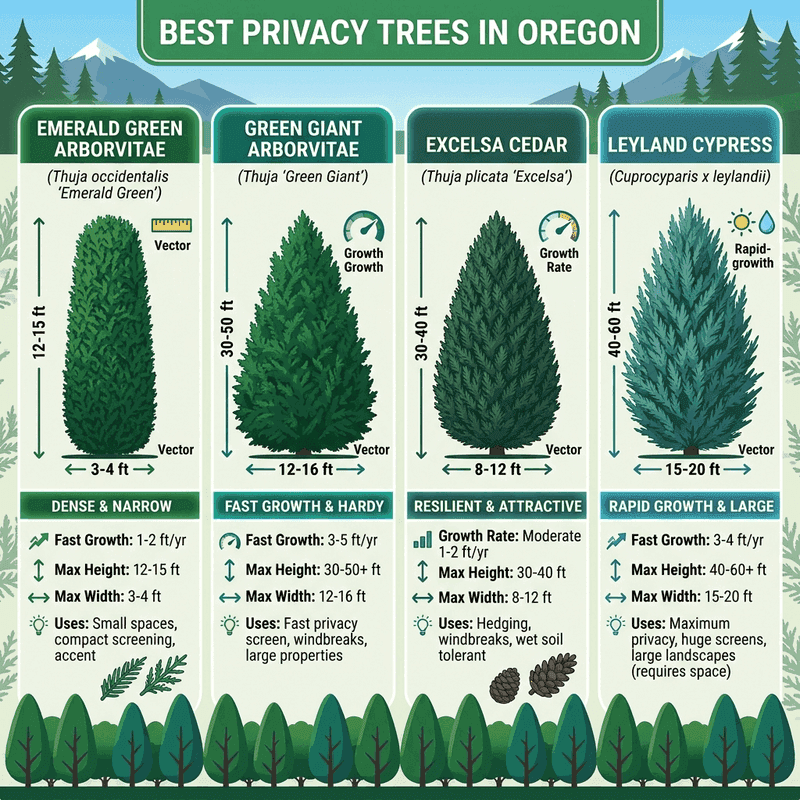
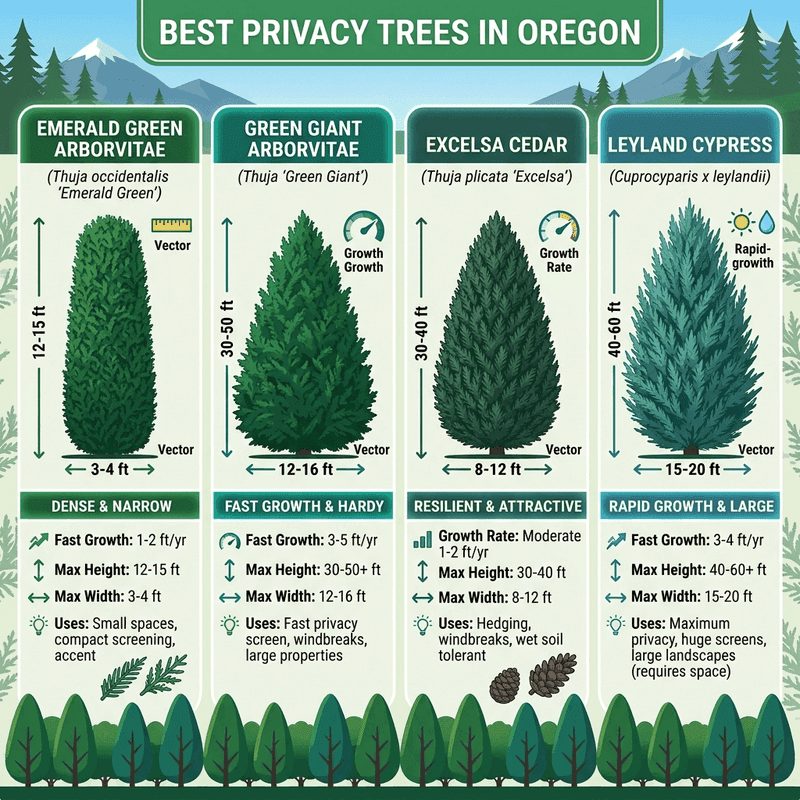
- Typical hedge spacing: 3–4 ft on center.
- Guide: Arborvitae Hedge Care (OSU Extension)
- Dense foliage; takes shaping well for a formal privacy wall.
- Safer than invasive English laurel.
- Non-invasive choices: GardenSmart Oregon – Non-Invasive Plants
Coast
Shore Pine (Pinus contorta var. contorta) — Wind/salt tolerant- Native that handles sand, salt, and prevailing wind.
- Great in mixed windbreaks.
- Info: OSU Landscape Plants Database
- Thrives in salty, windy sites; best for larger coastal properties.
- Info: OSU Landscape Plants Database
Central & Eastern Oregon
Rocky Mountain Juniper, Austrian Pine, Ponderosa Pine, Black Hills Spruce, Colorado Spruce- Proven for wind and cold east of the Cascades.
- Regional list: OSU Extension – Tree Selection
- A stately screen tree adaptable across Oregon.
- Info: OSU Landscape Plants Database
Fast Screens vs. Long-Term Windbreaks
- Fast, formal screens: Arborvitae are go-to for quick privacy.
- Durable windbreaks: Mix cedar, spruce, pine, and juniper for longevity.
Windbreak Layout That Works
- Layer rows: Even two staggered rows reduce wind significantly.
- Aim for 60–80% density.
- Keep lower branches.
- Good planting: Dig wide, keep root flare above grade, mulch, water deeply for 2–3 summers.
- Layout guide: USDA NRCS – Windbreak Design
Planting Calendar
- Western Oregon: Plant trees during the dormant season, November–April, choosing sturdy species like hot, dry spells.
- Central/Eastern Oregon: Plant early–late fall until ground freezes, or after thaw (late spring).
These windows improve establishment and reduce summer stress. - Guide: OSU Extension – Tree Planting