

The Nursery Outlet logo
Stress Smart Plants for Oregon Gardens background
Back to All Guides
Seasonal Care
3 min read
July 14, 2025

Stress Smart Plants for Oregon Gardens

Learn how stress-smart native plants adapt to heat spikes and wet winters to keep your garden resilient all season long.

Interactive Reference Guide

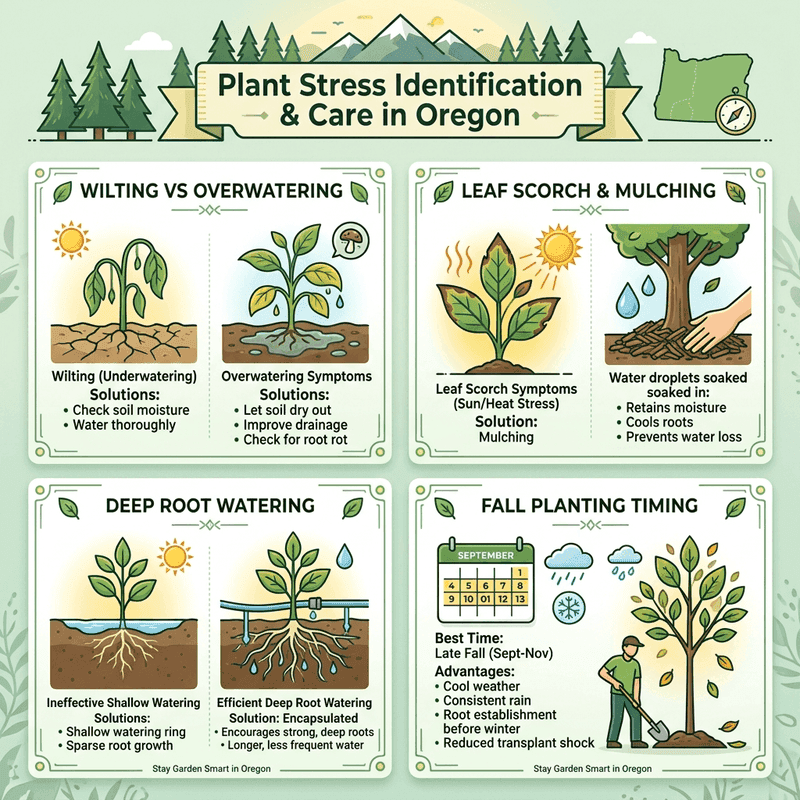
Plant Stress Identification & Solutions

Download
Plant Stress Identification & Solutions
Click to Open & Zoom High-Res Guide

Key Guide Takeaways

Wilting & DroopingCheck mid-day vs evening resilience before overwatering
Leaf Scorch & BrowningApply 2–3 inches of mulch to cool root zones
Deep SoakingWater deeply every few days rather than light daily sprinkles
Autumn PlantingSchedule major plantings for fall to reduce heat shock

Quick Answer

Diagnose Oregon heat and drought stress by inspecting mid-day wilting vs. evening recovery. Combat leaf scorch by maintaining a 3-inch organic mulch layer over root zones and soaking deeply twice weekly during August.

Quick Reference Highlights

1
Wilting & Drooping: Check mid-day vs evening resilience before overwatering
2
Leaf Scorch & Browning: Apply 2–3 inches of mulch to cool root zones
3
Deep Soaking: Water deeply every few days rather than light daily sprinkles
4
Autumn Planting: Schedule major plantings for fall to reduce heat shock
Plant stress responses can sound daunting, but here’s the good news: you can harness them to make your garden more resilient in changing weather. Whether you’re in Oregon or elsewhere in the Pacific Northwest, you’ve probably noticed that heat waves come earlier, rainfall gets patchy in summer, and winters might bring unexpected cold spells. When you choose stress-smart plants and give them the right care, you’ll set up your landscape for fewer struggles and more vibrant growth year-round.

Recognize stress signals

Your first step is to spot early warning signs. Plants typically communicate stress in subtle ways that you can catch if you look closely.
  • Wilting or drooping leaves, especially in midday
  • Leaf scorch or browning at the tips
  • Slowed growth, fewer blossoms, or spindly stems
  • Premature leaf drop or leaf curl
By watching for these signals, you can intervene before bigger issues arise. If leaves droop midday but bounce back in the evening, it might be normal heat slump. If they stay limp or show brown edges, you might need to adjust your watering routine or add shade.

Select climate-smart species

Not all plants cope well with shifting weather, so it pays to pick species that already thrive in your local climate. That way, you spend less time battling dehydration and heat damage. You can also consider low-maintenance selections that blend easily into existing beds or containers. Here’s a quick look at a few hardy options:
Plant Tolerances Best for…
Lavender Heat, dryness Sunny borders
Sedum Drought, poor soil Rock gardens, containers
Vine maple Variable seasons, partial shade Ornamental accent
Bee balm Full sun, moderate watering Pollinator spot
If you want more ideas that handle limited rainfall, check out these drought-resistant plants. Choosing the right varieties upfront is a huge time-saver since they’re naturally equipped to handle seasonal swings.

Adopt water-wise tactics

Water is a critical factor in plant stress responses, especially in hotter or drier spells. Fortunately, you don’t need fancy systems to manage moisture effectively.  Mulch generously
  • Spread a 2–3 inch layer of organic mulch around each plant. This locks in moisture and cools the soil surface.
Water deeply, not frequently
  • Soak the root zone every few days instead of giving a daily sprinkle. Deeper watering encourages roots to grow down where the soil is cooler.
Time your watering
  • Early morning or late afternoon is best, when temperatures are lower and less water evaporates.
Consistent, deep watering is gentler on your schedule and helps each plant adapt to seasonal dryness. Your plants get stronger roots, and you use less water overall.

Plan for shifting seasons

Your gardening strategy works best when you think a season or two ahead. Rapid temperature swings in fall or spring can stress new plantings, so try scheduling your biggest planting tasks for mid-to-late fall. That’s when the soil stays moist, and roots have time to settle in before winter chills set in.
  • Rotate planting areas annually if possible to prevent soil nutrient depletion.
  • Group plants with similar water and sun needs so you don’t over- or under-water.
  • Add compost or organic matter to keep soil fertile and improve retention of moisture.
You’ll find that these simple measures help your plants handle whatever nature throws at them—summer dryness, winter frost, or unexpected heat streaks in early autumn.

Recap and your next move

  1. Watch for early signs of stress like wilting or leaf scorch.
  2. Pick climate-smart species that already handle the Pacific Northwest’s unpredictable weather.
  3. Adopt water-wise habits, such as deep but less frequent watering.
  4. Plan plantings to align with cooler fall soil conditions.
With these steps, you can work alongside nature and let your garden’s defenses shine. You’ll soon see that strong roots and thoughtful choices lead to fewer troubles and brighter blooms. Remember, even small adjustments add up to a healthier, low-maintenance landscape. Go ahead and pick one new habit to try this week. Your garden will thank you, and you’ll enjoy a more carefree growing season.
TNO

Verified by The Nursery Outlet Team

Written by our local nursery specialists in Woodburn, Oregon. Tested and tailored specifically for Willamette Valley growing conditions.