
Almost half of Oregon’s counties have faced drought emergencies in the past year (Oregon.gov, 2024). If you want a lush garden without using gallons of water each day, consider adding drought-resistant plants. Good news, many species adapt well to the region’s changing climate and still offer vibrant color, fragrance, or flavor.
Why choose these hardy options
Smart plant choices help you preserve water and still enjoy a lively yard. By growing resilient varieties, you reduce stress on your local water supply and cut down on constant irrigation. You also encourage healthier root systems, since many drought-tolerant plants develop deep roots that soak up moisture even when surface soil is dry. The result, fewer wilted leaves in August and more time relaxing instead of dragging the hose around.
Seven drought-resistant plants to try
1. Lavender - Thrives in heat
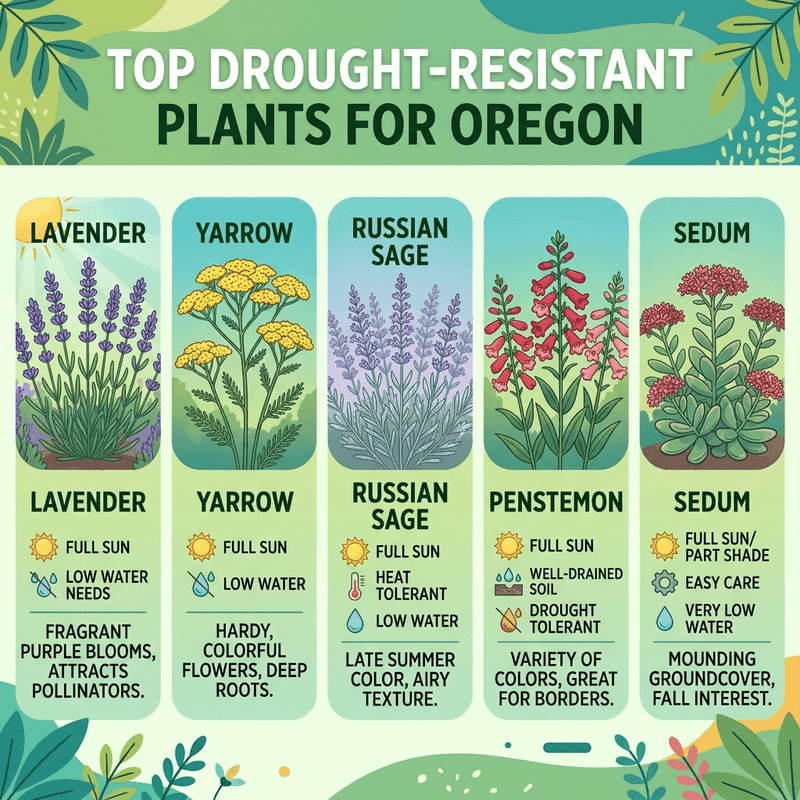
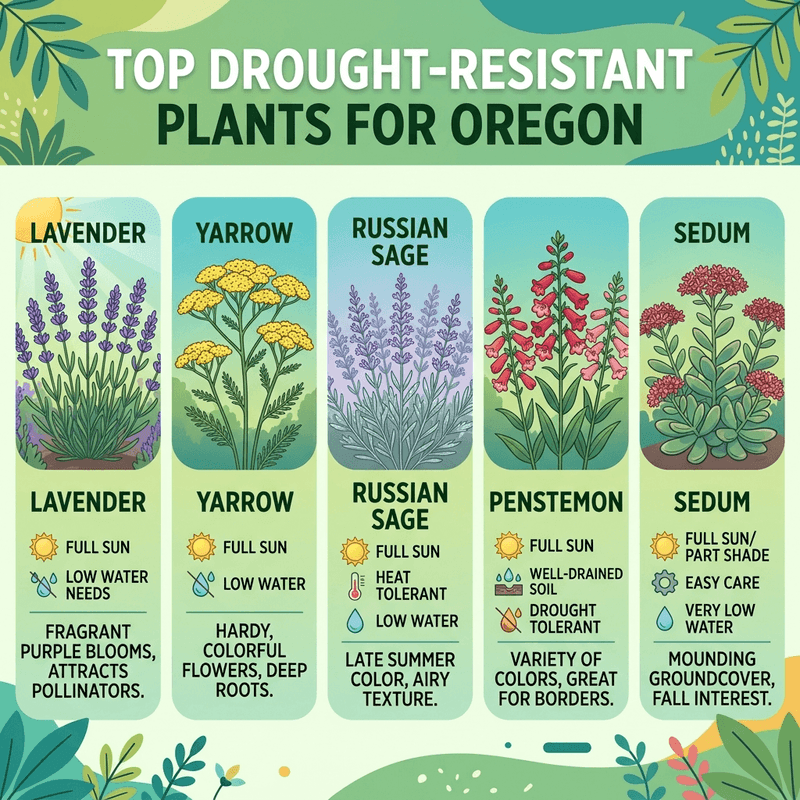
Lavender is known for its fragrant purple flowers and ability to cope with Oregon’s summer sun. It tolerates poor soil and needs moderate watering—often just once a week in peak summer. Prune lightly after flowering to keep it bushy and encourage more blooms.
- Full sun is best.
- Light watering, especially in well-drained or sandy soil.
2. Yarrow - Adds bright color
Yarrow’s clusters of tiny blooms bring a cheerful pop of yellow, pink, red, or white to your garden. It adapts well to rocky or sandy areas, supporting local pollinators like butterflies and bees.
- Performs best in full sun.
- Conserve moisture by mulching around the base.
3. Russian sage - Stands tall
Despite its name, Russian sage is not a true culinary sage. It sports silvery leaves and lavender-blue flowers, often towering up to four feet. Because it can handle both heat and drought, it’s a popular backdrop plant.
- Prefers full sun and well-drained soil.
- Cut back old stalks in early spring to stimulate new growth.
4. Penstemon - Fosters hummingbirds
Penstemon (also called beardtongue) thrives in semi-arid climates and draws hummingbirds with its tubular blooms. Once established, it doesn’t mind infrequent watering. To learn more about how plants cope with limited moisture, check out plant stress responses.
- Needs partial to full sun.
- steer clear of issues by choosing sturdy species like waterlogged soil by spacing plants well.
5. Rosemary - Does double duty
Rosemary doubles as an aromatic herb and a drought-friendly ornamental. With its needle-like leaves, it shrugs off heat and prefers slightly dry conditions. You can use it to flavor dishes or let its small blue flowers add charm to your garden’s edge.
- Grows best in full sun.
- Prune to shape after flowering.
6. Sedum - Holds water well
Sedum (often called stonecrop) is a succulent that stores water in its thick leaves. This plant excels in gravelly soil and rock gardens, where it only needs the occasional sip. Many varieties produce bright flowers that attract pollinators, from bees to butterflies.
- Thrives in full sun with minimal watering.
- Great in containers, too.
7. Culinary sage -For flavor
Beyond Russian sage, culinary sage is another resilient choice. Its gray-green leaves are ideal for cooking, and it grows well in areas with limited rainfall. Plenty of sun and lean soil will keep it healthy and flavorful.
- Plant in full sun and steer clear of issues by choosing sturdy species like overly rich soil.
- Harvest older leaves for best taste.
Wrap-up and next step
By selecting drought-resistant plants that love Oregon’s variable weather, you set yourself up for a lower-maintenance, high-reward garden. Try one or two of these species, and enjoy a yard that looks green even on the hottest days. You’ve got this, and the data suggests these hardy options can make your summer planting easier and more sustainable.