
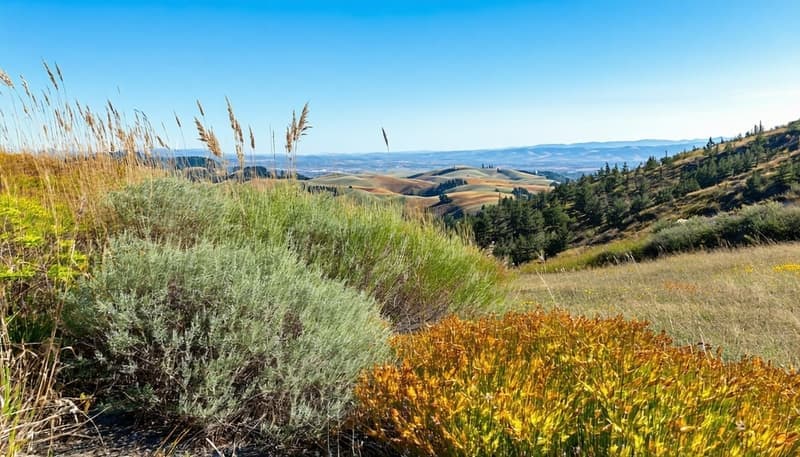
When it comes to the best native grasses of Oregon, you have plenty of beautiful, hardy options to explore. Choosing local species means lower water use, stronger pest resistance, and a garden that supports local wildlife. In one Oregon State University horticulture survey (2023), homeowners who planted three or more native grasses noted a 12% increase in helpful pollinator visits. Good news, it’s easier than it sounds to integrate these grasses into your yard.
Pick these 10 Oregon grasses
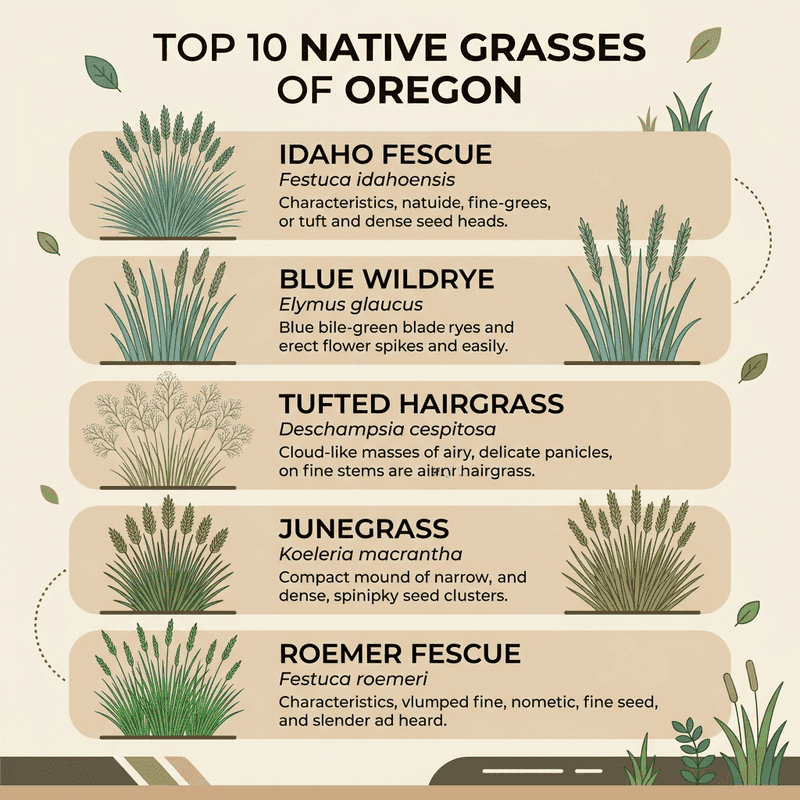
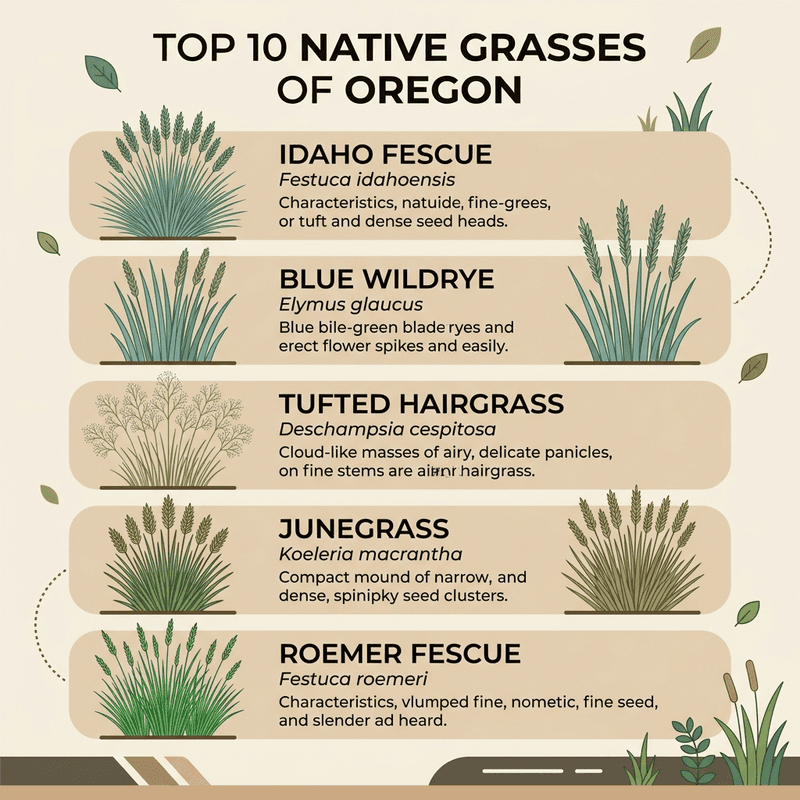
Below are ten popular choices for Oregon-based home gardeners, each with a quick look at pros and considerations. Whether you want a modern landscape, a meadow-like retreat, or a blend of the two, these species can fit your style. If you live by the coast, see Oregon coastal native plants for even more ideas that thrive in coastal conditions.
1. Idaho fescue (Festuca idahoensis)
- Pros: Handles drought well and stays compact. Often used in ornamental borders.
- Considerations: Prefers full sun, not ideal for waterlogged spots.
2. Blue wildrye (Elymus glaucus)
- Pros: Quick to establish, tolerates partial shade, and grows well in many soil types.
- Considerations: Can reach up to four feet tall (plan for space if you have a small yard).
3. Tufted hairgrass (Deschampsia cespitosa)
- Pros: Attractive seed heads, lovely in mass plantings. Great for moist areas.
- Considerations: Needs regular moisture, so water it during dry summers.
4. Junegrass (Koeleria macrantha)
- Pros: One of the earliest grasses to green up, works in rock gardens.
- Considerations: Doesn’t enjoy heavy clay soil, so look for well-drained beds.
5. Roemer’s fescue (Festuca roemeri)
- Pros: Native to western Oregon, thrives in low-fertility soils, good deer resistance.
- Considerations: Slow-growing compared to other fescues.
6. Native red fescue (Festuca rubra)
- Pros: Often used as a low-mow lawn alternative, soft texture underfoot.
- Considerations: Grows best with some shade, can look patchy in full sun.
7. Slender wheatgrass (Elymus trachycaulus)
- Pros: Quick germination, flexible soil tolerance, nice for erosion control.
- Considerations: Color fades if kept too dry, so light watering helps maintain vibrancy.
8. California oatgrass (Danthonia californica)
- Pros: Dense, tufted growth that helps block weeds. Good fit for meadow-like gardens.
- Considerations: Prefers cooler climates, you might need to water more often in hot eastern regions.
9. Western fescue (Festuca occidentalis)
- Pros: Easy to maintain once established, attractive bluish hue.
- Considerations: Requires steady rainfall or weekly watering during very dry spells.
10. Meadow barley (Hordeum brachyantherum)
- Pros: Ideal for wetter zones, forms a loose, natural-looking groundcover.
- Considerations: Can self-seed heavily, so keep an eye on spread.
Encourage local pollinators
Most of these grasses offer modest cover for beneficial insects and birds. If you’d like to attract more bees or hummingbirds, consider surrounding these grasses with Pacific Northwest native plants for pollinators. This combination can create a vibrant habitat in your yard.
Wrap-up and next step
Choosing native grasses is a straightforward way to boost your garden’s resilience and nurture local wildlife. Start with just one or two varieties, keep them watered as they settle in (especially in the first season), and enjoy the benefits of a lower-maintenance, eco-friendly lawn. You’ll likely notice fewer pests, less watering, and a yard that blends effortlessly with Oregon’s natural charm. Go ahead and try one of these native grasses, and watch your Oregon garden thrive.